A Conversation with the King of Crime-Thrillers, David Baldacci

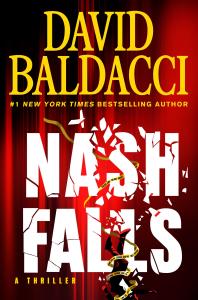
Novel Suspects: How did writing NASH FALLS compare to your previous thrillers like the Amos Decker or the Atlee Pine series? How has your writing evolved over time?
David Baldacci: Walter Nash was a very different character to create than someone like Amos Decker or Atlee Pine. Nash has no experience in law enforcement or the military. He’s not in great physical shape, never fired a gun in anger. He’s not experienced in the world I dumped him into. I wanted to take his character, strip it of everything, force Nash to totally reinvent himself and then see what happened. Would he sink or would he swim and to what degree for either result. Every writer should continue to evolve with every story. You learn from each experience. You hopefully get a little better with each outing. I think it’s best to go in scared on each book because that makes you raise your game, work harder, reach farther. Complacency breeds repetition and thus mediocrity.
NS: You’ve written across several subgenres, legal, political, espionage. What drew you to the world of corporate crime with this story? What was the research process like for this book? Did anything in your research surprise you?
DB: The world I placed Walter Nash in was financial and thus I had to learn that world. My experience as an attorney gave me some knowledge, and my personal business activities have added to my knowledge of the subject matter. Money moves mountains and for better or worse (it’s often worse) that arena is where a lot of the action is truly happening in the real world. The money laundering aspect was eye-opening. Not just criminal organizations doing it, but, to a certain extent, “legal corporations” engaged in moving money around the world in a sort of shell game to get the lowest tax bill possible. Having read the Panama and Pandora Papers when I was writing the 6:20 Man series, I was well versed in that regard and used some of that information in NASH FALLS. As far what surprised me, I guess I’ve been doing this so long not much surprises me in the way of people and companies looking for any way to screw over everyone else.
NS: You have said before that you don’t always plan the twists and turns of your books out in advance and rather let the plot unfold naturally. How did your more organic plotting approach influence the story’s transformation arc and those surprise structural turns?
DB: I really did let this one grow organically. I wasn’t sure what to do with Nash and the other characters at the beginning. I just let it play out as the story unfolded. Halfway through I decided to do something very different with one of the characters that the reader won’t fully realize until they read the sequel, HOPE RISES.
This change did surprise me and then I realized I was playing it safe before, but going out on a limb and seeing if I could pull it off just made me try harder. This is a good thing in my estimation. By being surprised by how the story unfolds, I’m always on my game, always on my toes to sense anything false or off-key as the story rolls along. I’m invested in the story totally. I’m not typing away from a pre-conceived outline. That, I think, would be boring for me to write and boring for people to read. Some writers who use outlines do a great job, but each writer needs to find what works best for them for each project, and their process may change back and forth over time.
Being flexible is a key to turning out good work consistently. Every story has its own unique beats and no single process can successfully navigate that journey. So don’t force it to.
Discover the Book