
Amateur Sleuths and the Allure of Ordinary People Solving Crimes

Every mystery novel has a detective: someone who is helping to track down a murderer, locate stolen goods, and generally fight back against the forces of evil.
The detective may not be someone who is an official badge-wearing member of law enforcement. Instead, the sleuth is an amateur: someone who may have witnessed the crime, or knew the victim, or who takes an interest in detective work.
Why do we love amateur sleuth stories so much? There are quite a few reasons why.
The amateur sleuth is an extension of the reader. Through them, the reader feels that they too are helping to solve the crime.
We may surmise that most people who read mystery novels do not work in law enforcement, so a police procedural might be a strange world to them. But a mystery novel from the POV of a regular person might seem more believable.
The sworn law enforcement may have mixed feelings about the amateur sleuth getting involved. Some of them might be grateful for the outside assistance, while others–quite understandably–are not at all happy about a civilian getting underfoot.
A civilian might notice things that the professionals might overlook. Consider MRS. HUDSON AND THE MALABAR ROSE by Martin Davies. While set in the world of Sherlock Holmes, the focus is instead on the redoubtable Mrs. Hudson and her assistant, the young maid-of-all-work Flotsam.
The plot involves the theft of a rare gem from a museum exhibit. Mrs. Hudson notices certain details, including a suspect’s unusual choice in clothing and accessories, that the male professionals ignore or scoff at. But these details are crucial to understanding the criminal’s psychology. And while Holmes, Watson, Lestrade et al are pursuing the expected avenues—networks of jewel thieves, possible sabotage, etc.—Mrs. Hudson and Flotsam conduct their own interviews, including with a middle-class housewife, a clockmaker, a magician, and a high-profile dancer.
Perhaps the appeal of amateur sleuth stories derive from a sense of frustration: a feeling (justified or otherwise) that the official law enforcement aren’t doing enough to solve a crime, or are going completely in the wrong direction.
There’s often a power dynamic in amateur sleuth stories. The official police with their badges and warrants have a lot of power and authority that civilians do not. For someone to step up and become a citizen detective is to assert their own rights and to speak out. “I am not a sworn officer, but I have a right to be heard and to get involved as best I can.”
A lot of times, this power dynamic is gendered. The amateur sleuth in many mystery novels is often a woman or female-identifying person, while the police are usually mostly men, or otherwise male-identifying. When the amateur sleuth gets involved, the police often respond with an air of “don’t bother your pretty little head” or “stop being a nuisance and go home and behave yourself”. In other words, they’re patronizing or scolding the sleuth for stepping outside of what’s acceptable. So for the amateur sleuth to continue investigating, and to be the one to solve the crime, is to fight back against gender stereotypes.
Miss Marple is the grande dame of citizen detectives. Her influence is such that there’s an entire subgenre of “elderly lady with too much free time solves the case.” Miss Marple may seem, in the eyes of the local police or the unidentified criminal, a harmless little old lady or a bit of a nuisance. But her observational and deductive reasoning skills make her a force to be reckoned with.
In today’s crime fiction market, cozy mysteries are probably the genre where amateur sleuths reign supreme. Countless cozies have a bookshop owner, baker, librarian, craft shop proprietor, or bookbinder who finds themselves embroiled in a murder investigation. (Exactly where these small business owners find the time and energy, amid all the tribulations of keeping a small business afloat, to put a detective agency’s worth of effort into solving a murder, is a mystery unto itself. But we digress.)
Amateur sleuths are appreciated by all age groups; children’s fiction abounds with kids and teens (and a pet or two) solving mysteries and easily figuring out conundrums that stump the grownups.
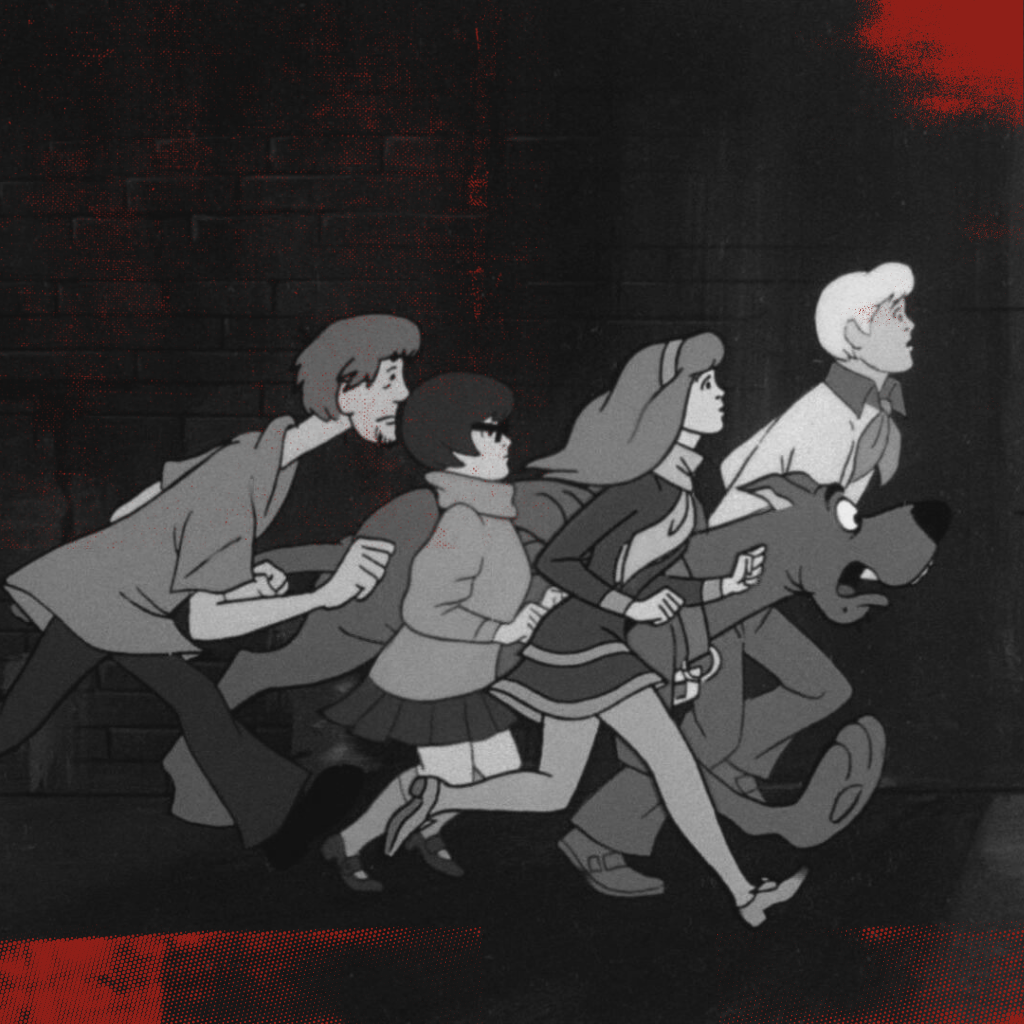
Generations of American kids grew up reading Nancy Drew, the Hardy Boys, and the Boxcar Children, while their counterparts across the pond enjoyed Enid Blyton’s Famous Five and the Secret Seven. (Scooby-Doo and the Mystery Machine gang are very much part of that long tradition of kids-and-pets-save-the-day.)
Books aimed at children, of course, tend to stay away from murders and any other crimes that are excessively violent. A fantastic theft at the local museum, sabotaged freezers at the ice cream festival, or a wealthy lady’s missing parrot are likely to be standard cases for kid sleuths.
With kid detectives, amateur sleuthing is a way for the kids to start asserting their independence and speaking their own minds. There’s something very satisfying for a kid to be able to prove they’re right and the grownups are wrong: “We’re not helpless little kids who have to depend on the adults for everything, we can save the world in our own way.”
Whatever your reasons for reading books about amateur sleuths, it can be said that they have a long and glorious history of fighting crime and bringing evil-doers to justice. And the world of detective fiction is all the better off for their presence.
Investigate More from Novel Suspects



Erin Roll is a freelance writer, editor, and proofreader. Her favorite genres to read are mystery, science fiction, and fantasy, and her TBR pile is likely to be visible on Google Maps. Before becoming an editor, Erin worked as a journalist and photographer, and she has won far too many awards from the New Jersey Press Association.Erin lives at the top floor of a haunted house in Montclair, NJ. She enjoys reading (of course), writing, hiking, kayaking, music, and video games.