
Why Jane Austen Books Make the Perfect Backdrop to Murder Mysteries
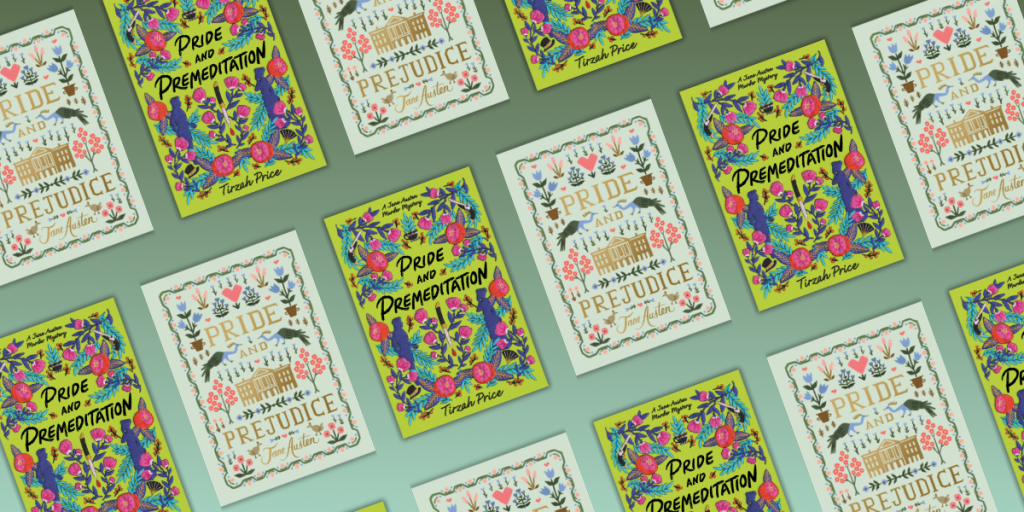
Perhaps the most frequent question I’ve received since publishing my debut novel, Pride and Premeditation, four years ago is, “What made you decide to retell Pride and Prejudice as a murder mystery?”
My responses have run the range from cheeky—zombies were already taken—to serious: I love murder mysteries, I love Austen, and after working with teens as a librarian, I could see that there was an interest in genre-bending retellings of classics, and I thought, why not? But the other reason? Jane Austen’s settings and premises are especially ripe for adding a dash of murder.
While some of her critics might see her books as stuffy drawing room novels of courtship and manners, when I reread her work as an adult I realized that there was a lot more simmering under the surface than my teenage read-throughs and the various romantic adaptations suggested. Of course, we love the romantic heroes and we swoon over the moments when true feelings are finally declared, but that’s not all that propels us through these classics: Societal constraints that drive people to desperate acts, characters are not quite as silly or trite as they’d have others believe, motivations are propelled by money and greed, and there is more than a tragic death or two. With such delicious plot elements to work with, it wasn’t such a stretch of the imagination to add in some murder.
But what really drew me to recasting Austen’s originals into mysteries and taking the villains up a notch wasn’t just plot—it was the incisive takes that Austen had on society. The types of mysteries that I enjoy don’t just follow clues from point A to point B; they interrogate the systems of power and privilege that we exist within. And who does that better than Jane Austen? It was a joy to recast Lizzie Bennet as a quick-witted young woman who aspires to have a career in Pride and Premeditation. And like within the source material, my version of Lizzie is not without her faults and prejudices as she grapples with finding the truth in a world where life isn’t always fair to women or other minorities. She jumps to conclusions, believes that her view of matters is the only view that matters, and places her trust in the wrong people at times. But she also experiences character growth through her push-and-pull relationship with Darcy (cast as a rival solicitor who doesn’t think Lizzie has much to offer the case—at first), and in her interactions with those around her, from Charlotte Lucas to new characters I was able to slip into my version of the books.
When I got the opportunity to continue Lizzie and Darcy’s story in In Want of a Suspect and A Matter of Murder, it was a delicious opportunity to expand upon their world and their character arcs, but I wanted to do it in such a way that felt authentic to the characters. In A Matter of Murder, I was able to utilize elements of Pride and Prejudice (Netherfield Park is let at last!) and also pull on gothic elements and details about village life in order to craft a cold case that has Lizzie and Darcy digging through the past while also trying to forge a future together.
While the spin-off Lizzie and Darcy Mysteries may poke and prod at subjects that Austen didn’t write about directly, at the core of each book is about these two, stubborn lovable characters working to get to a point where they can be together without compromising who they are. I so much twisting such an iconic classic tell an original mystery that I hope readers will find satisfying…and hopefully wouldn’t disappoint Jane!