The Call of the Void: A Case for Inspiration and Writing Tense & Atmospheric Horror
I love a good haunted house, but I’ve spent most of my life in Austin, Texas, and the idea of shivering in a dark and drafty house, looking for the source of some ghostly noise is as quaint and distant as a Victorian Christmas tale.
The Texas Chainsaw Massacre still holds space in my brain after all these years, because I’ve been there. Not to the original house in Round Rock, which was moved to Kingsland Texas, or even to the fields of Leander where it was filmed. No, I’ve been in the back of an old van with broken air-conditioning and too many people, on a road trip destined to go south ( not Texas Chainsaw Massacre south, but still). Used to be thirty miles out of Austin was the middle of nowhere. Not anymore.
But this is a big country, and there are still places desolate enough to put a lump in your throat at the thought of having car trouble. Places where cell reception is iffy at best. If you’re traveling west from Deming New Mexico on I-10, you better have enough gas in your tank to get to Lordsburg sixty miles away, because there’s little in-between but open sky and miles of desert. I know from experience.
When the pandemic hit, my older brother was living in Las Vegas. He was in poor health and he had a maddening habit of not answering texts for days or even weeks at a time. I drove several times on I-10 through the desert southwest just to check up on him.
I could have stopped at the grand canyon along the way, but instead, I took repeated detours to a copper mine and stood at the overlook, awed by the stair-stepped canyon, a ziggurat in reverse. It inspired me to write The Deep Well, a horror novel set at a copper mine in the southwest.
There are numerous horror novels and movies set in subterranean mines and caves that rely on the claustrophobic fear of being buried beneath thousands of feet of rock. From Lovecraft to my favorite all-female horror movie, The Descent, close dark passageways and unseen monsters bring full-on scares.
Mines are terrifying.
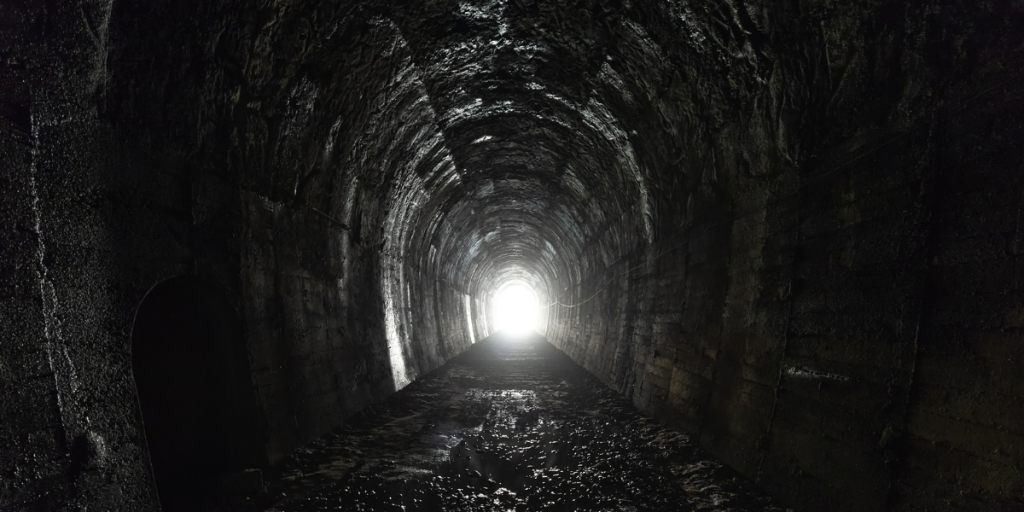
But the sight of the vast open pit mine tapped into a completely different emotion for me—l’appel du vide, or the call of the void—the sudden impulse when standing on the edge of the world to jump. I’m afraid of heights, but I also have moments where l’appel du vide overtakes me. It’s perfectly normal, this desire to jump, and it’s instantly followed by a reflexive horror at the very idea of stepping into the void. If not, there would be fewer of us around.
I’m ADHD and I have reason to fear my impulses more than most. I am definitely a leap before you look type. I once had a friend grab the back of my shirt to keep me from jumping into a moving train traveling north. A boxcar door was open, and I was curious. No thought about what would’ve happened if I’d made it, and the train had picked up speed. We were in New Orleans at the time, and the next stop probably would have been Baton Rouge.
The call of the void scares me, but it also intrigues me.
More than most impulses, that strong momentary urge towards disaster that is the call of the void feels alien. There are few other moments when the human mind actively flirts with self-annihilation.
The strangeness of l’appel du vide inspired The Deep Well. What if the call of the void was actually a call from—something else? Something external. And what if that call became harder and harder to ignore?
You’d need someone to grab the back of your shirt and pull you away from the edge. I write about the horror that lurks at the edges of the mind, but I don’t forget what else is there. We can always pull each other back from the brink.
Discover the Book
When April Fischer was five, the voice from the well told her to fly.
Ever since April survived the strange and brutal massacre at the Copperton mine twelve years ago, she has been in the spotlight. Most frighteningly, as the darling of a cult that believes that on her seventeenth birthday she will come into universe-altering power. April has unanswered questions about what really went down at the mine–most of all, what happened to her father, who disappeared on that day. Until the week before her birthday, when she is given a collection of documents and the words “He’s alive.”